Building Revenue Models That Scale and Grow
Explore sustainable pricing strategies, value positioning, and long-term business planning for dependable revenue growth.
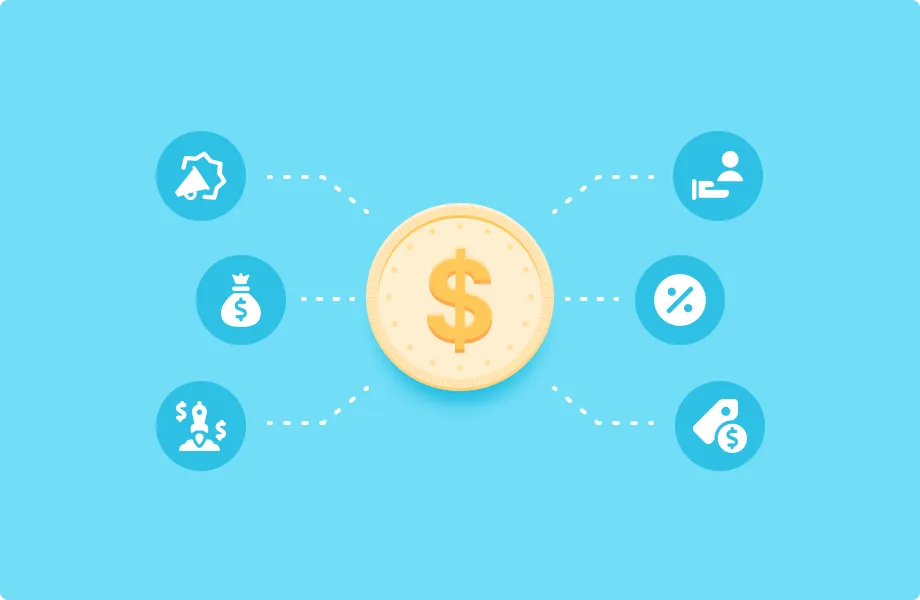
A scalable revenue model connects the value customers receive with a price they understand and a cost structure the business can sustain. Growth becomes fragile when revenue increases only through proportional increases in effort or expense.
Start With Customer Value
Pricing should reflect the outcome a customer values, not simply the cost of producing a feature. Research why customers choose the product, which alternatives they compare, and what makes the problem urgent.
Different customers may value the same product in different ways. Clear segments help a business design offers without making the pricing structure unnecessarily complex.
Select the Right Revenue Structure
Common models include subscriptions, usage-based pricing, transactions, licensing, and professional services. Each creates different incentives and cash-flow patterns.
Evaluate a model against:
- How customers naturally receive value
- Predictability of revenue
- Cost to serve additional customers
- Ease of adoption and expansion
- Risk shared between customer and provider
Hybrid models can work well, but every added rule increases the burden of explanation and administration.
Understand Unit Economics
Growth should improve the business rather than amplify an underlying loss. Track customer acquisition cost, gross margin, retention, expansion, and the time required to recover acquisition spending.
Segment these measures by customer type and channel. A healthy average can hide an unprofitable segment.
Design for Retention and Expansion
Recurring revenue is durable only when customers continue to receive value. Strong onboarding, measurable outcomes, reliable service, and responsive support all contribute to retention.
Expansion should follow increased value. Additional usage, capabilities, or team access should feel like a natural next step rather than an arbitrary restriction.
Test Pricing Deliberately
Use customer research and controlled experiments to test packaging, price levels, and willingness to pay. Monitor conversion alongside retention and customer quality; a higher conversion rate is not always a better long-term result.
Communicate changes transparently and protect trust with existing customers.
Conclusion
Scalable revenue comes from alignment: customer value, pricing structure, and delivery costs must reinforce one another. Businesses that monitor unit economics and continuously improve customer outcomes create growth that is both faster and more resilient.
Build Better Products with Insights & Inspiration.
Real feedback from students who’ve learned new skills and grown with our courses. Their success stories inspire others to join and thrive.

Designing Products That People Actually Use
Understand the balance between usability, clarity, and function that transforms ideas into products people choose to use.

Turning Performance Data Into Smart Decisions
Learn how to define meaningful KPIs, interpret trends, and translate metrics into strategic actions with measurable impact.

Campaign Frameworks That Drive Real Results
Discover proven approaches to audience targeting, positioning, execution, and performance analysis for more effective campaigns.
Explore our all courses and get increase your knowledge
Become part of a thriving community where 5,482 developers come together to share knowledge, collaborate on projects, and grow their skills.

Product Strategy & Business Scaling for Startups
Product Strategy & Business Scaling

UI/UX Design: From Wireframe to Prototype
Product Strategy & Business Scaling for Startups
Product Strategy & Business Scaling
UI/UX Design: From Wireframe to Prototype
Product Strategy & Business Scaling for Startups
Product Strategy & Business Scaling
UI/UX Design: From Wireframe to Prototype
Product Strategy & Business Scaling for Startups
Product Strategy & Business Scaling
UI/UX Design: From Wireframe to Prototype
Performance Marketing & Growth Strategy

Advanced AI Applications & Intelligent Workflows
Data Analytics & Visualization Mastery
Performance Marketing & Growth Strategy
Advanced AI Applications & Intelligent Workflows
Data Analytics & Visualization Mastery
Performance Marketing & Growth Strategy
Advanced AI Applications & Intelligent Workflows
Data Analytics & Visualization Mastery
Performance Marketing & Growth Strategy
Advanced AI Applications & Intelligent Workflows